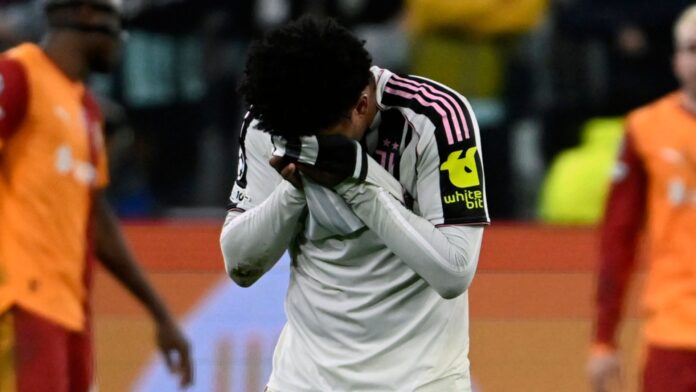


Atalanta pulled off a thrilling, last-gasp turnaround to make it to the Champions League last 16. Juventus battled valiantly into extra-time with 10 men. But that show of fight hasn’t lifted the dark cloud which settled over Italian football this week.
February 26, 2026
Italian football has reached a troubling nadir as Atalanta emerged as the sole representative in the Champions League’s last 16, while traditional powerhouses Juventus, Inter Milan, and Napoli stumbled out of the competition. This marks a significant downturn for Serie A, raising questions about the league’s competitiveness, financial strategies, and emerging talent.
**A Grim Reality for Italian Giants**
Atalanta’s dramatic qualification, sealed by Lazar Samardzic’s decisive penalty in the 98th minute, offers a glimmer of hope amid a bleak landscape for Italian clubs in Europe. Juventus, despite a resilient performance with only ten men, suffered a shocking 7-5 aggregate defeat to Galatasaray, highlighting their fall from grace. Meanwhile, Inter Milan’s unexpected exit at the hands of Norway’s Bodo/Glimt further underscores the decline of Italian football, especially as they were eliminated by a team in its debut Champions League season. To compound matters, Napoli, the reigning Serie A champions, failed to progress past the league phase, and AC Milan did not even qualify for European contention this year.
**Historical Context and Current Challenges**
The current state of Italian football contrasts sharply with its storied past when Serie A was home to some of the world’s greatest talents and teams. Legends such as Ronaldo Nazario and Christian Vieri once showcased the league’s strength and allure. However, the recent performances of Italian clubs reflect deeper issues. The once-dominant league now struggles against faster, more aggressive European teams. As Fabio Capello, a seasoned Italian coach, noted, the slow pace of Serie A has become a liability. Italian teams often falter against opponents that employ high-speed play and relentless pressing, leading to costly mistakes that exacerbate their struggles in international competitions.
**Wider Implications and the Road Ahead**
The challenges facing Italian football are not limited to club performance. The national team is on the verge of missing a third consecutive World Cup, a shocking development for a nation that has lifted the trophy four times. The slow tempo of Serie A, characterized by cautious play and frequent stoppages, has been criticized for failing to prepare teams for the rigors of international competition. This trend is further illustrated by comparative analysis: Serie A has the second-lowest direct speed of play among Europe’s top leagues, only outpaced by France’s Ligue 1. In contrast, the Premier League’s increasing tempo has been credited with the strong performance of English clubs in the Champions League.
Italian football’s current predicament calls for a strategic reassessment. Addressing the speed and style of play, coupled with fostering young talent and enhancing financial competitiveness, could help restore the league’s former glory. As the football world keenly observes, the steps taken by Serie A in response to this crisis will shape the future of Italian football on the European stage.
Recommended For You
Affiliate disclosure: We may earn a commission from qualifying purchases.