Category: Asia Trending

Trending content from across Asia

  • Hong Kong Chikungunya Outbreak: Urgent Mosquito Control Needed After Severe Rainstorm

    Hong Kong Chikungunya Outbreak: Urgent Mosquito Control Needed After Severe Rainstorm

    Record-Breaking Rainstorm Raises Mosquito Concerns

    Hong Kong experienced a black rainstorm warning lasting 11 hours and 15 minutes, the second-longest on record. Following this extreme weather, experts warned that the Hong Kong chikungunya outbreak risk could rise due to widespread mosquito breeding. Government data showed that 70% of surveyed areas had significant infestation.

    First Imported Case Signals Rising Threat

    Just days before the storm, Hong Kong confirmed its first imported case of chikungunya fever since 2019. This mosquito-borne disease poses a serious public health threat. Peter Leung Kwong-yuen, chairman of the Pest Control Personnel Association, emphasized that stagnant water from heavy rain creates ideal breeding grounds for mosquitoes, increasing the likelihood of a Hong Kong chikungunya outbreak.

    Expert Warnings on Post-Storm Mosquito Breeding

    “After heavy rain, water bodies don’t evaporate quickly. Extra efforts are needed to apply larvicide sand and oil,” Leung explained.

    Even though storms can wash away some standing water, lingering puddles often remain, creating hotspots for mosquitoes. Without prompt action, these sites could trigger new outbreaks of mosquito-borne illnesses, including chikungunya.

    Why Strong Mosquito Control Is Essential

    Inadequate mosquito control has serious consequences. Climate change and urbanization have worsened mosquito breeding conditions in Hong Kong. Health authorities stress that proactive, sustainable measures are necessary to prevent the Hong Kong chikungunya outbreak from spreading further.

    Public Awareness and Preventive Actions

    Officials are urging residents to remove stagnant water around homes, support mosquito control operations, and stay vigilant. By taking preventive action, Hong Kong can reduce the risk of additional chikungunya cases and protect the community.

    A Crucial Test for Public Health

    The recent rainstorm and rising mosquito activity highlight Hong Kong’s need for resilience against mosquito-borne diseases. Effective mosquito control is not optional—it is essential to safeguard public health and prevent the Hong Kong chikungunya outbreak from worsening.


    Read more

  • Main Opposition Leaders Booted from Parliament

    Main Opposition Leaders Booted from Parliament

    In a dramatic political development, the Election Commission of Pakistan (ECP) disqualified nine lawmakers on Tuesday. These included prominent opposition leaders from both the National Assembly and the Senate. The disqualifications followed convictions in cases linked to the May 9 riots.

    Key Lawmakers Disqualified

    The ousted politicians include:

    1. NA Opposition Leader Omar Ayub

    2. Senate Opposition Leader Shibli Faraz

    3. Zartaj Gul and Rai Haider Ali Khan

    4. Sunni Ittehad Council chief Hamid Raza, a key PTI ally

    The ECP’s notification declared their seats vacant, paving the way for upcoming by-elections.

    Legal and Political Reactions

    PTI parliamentary leader Barrister Syed Ali Zafar criticized the move as a “disqualification spree.” He highlighted concerns about procedural inconsistencies and disqualifications based on non-final convictions. According to Zafar:

    • The ECP should not act as a trial or appellate court.

    • Presumption of innocence must be maintained until all legal remedies are exhausted.

    • Disqualifications should only follow conclusive judicial declarations.

    Implications for Democracy and Accountability

    The disqualifications have ignited debates about the ECP’s role, selective accountability, and institutional overreach. Observers warn that such actions could undermine democratic principles and judicial independence.

    Transition words help show the flow: However, disqualifying politicians on ongoing cases can erode public trust. Moreover, these actions set important precedents for the balance between political power and legal accountability.

    Looking Ahead

    As Pakistan’s political landscape evolves, the future of the disqualified lawmakers remains uncertain. These events emphasize the need for:

    • Transparent electoral processes

    • Adherence to constitutional principles

    • Robust legal frameworks

    Ultimately, the delicate interplay between legal proceedings and political consequences will shape Pakistan’s democracy.

    Read more

  • Forest-Rich Areas in Asian Countries in Percentage

    Forest-Rich Areas in Asian Countries in Percentage

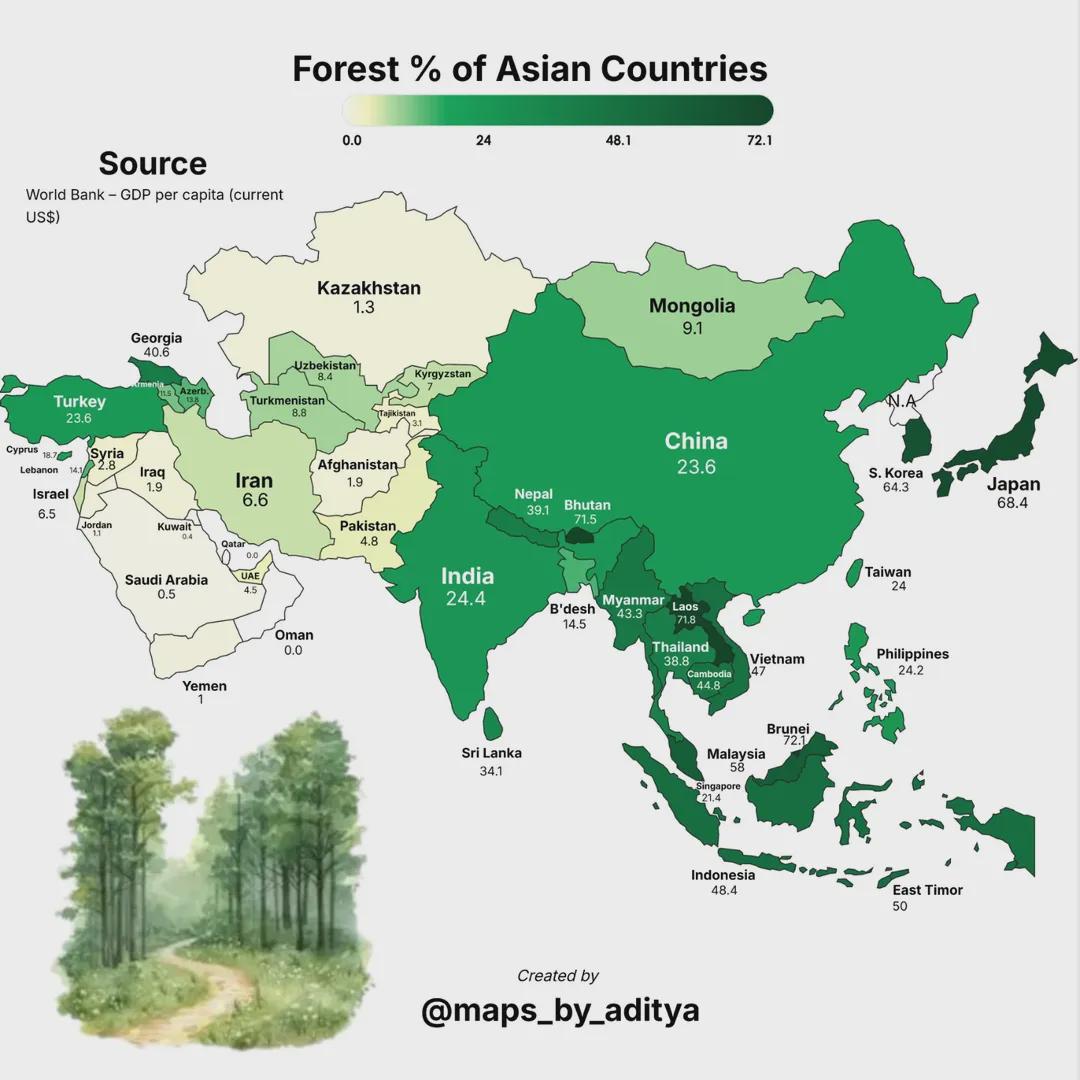
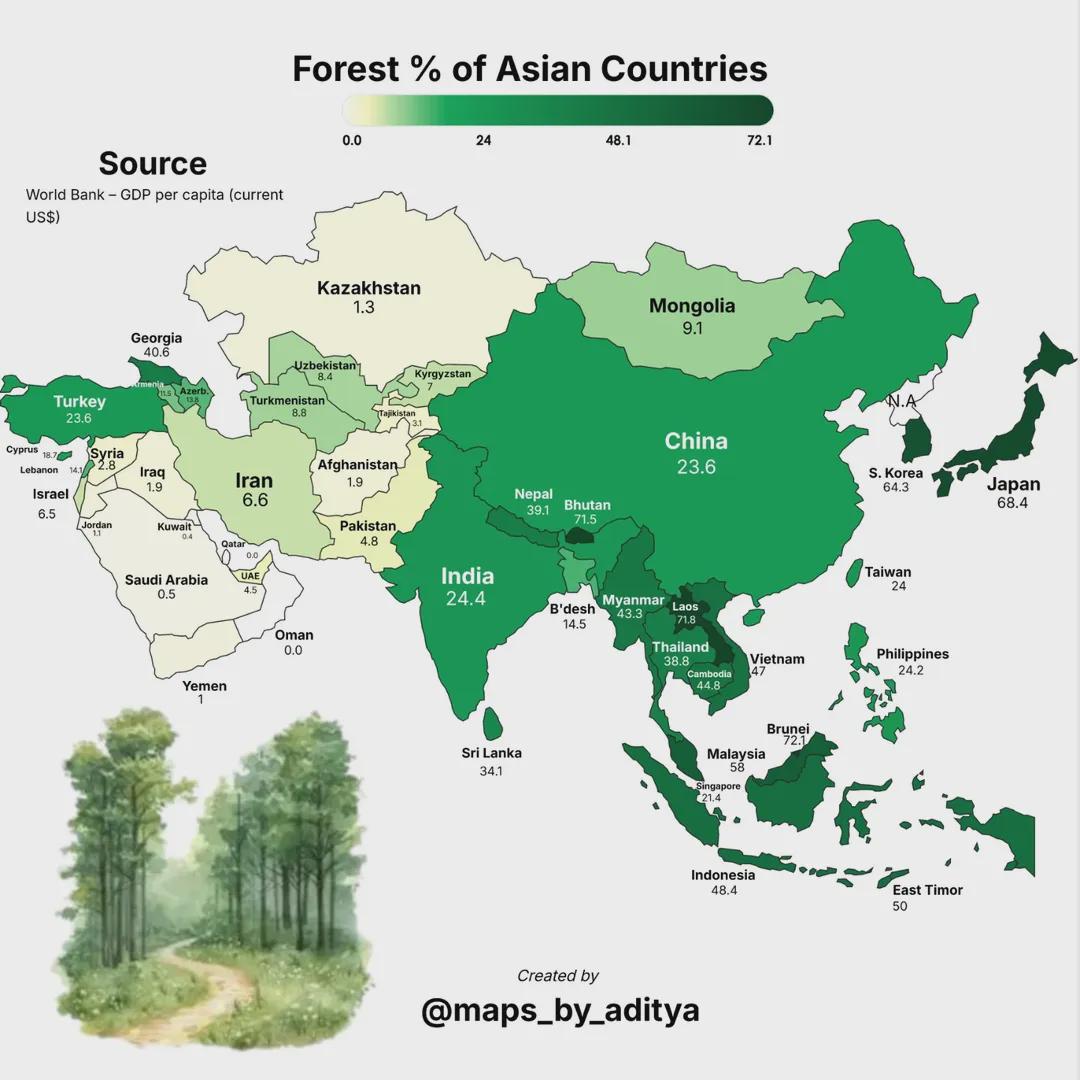
    Have you ever wondered about the extent of forest-rich areas in Asian countries? A recent infographic shared by @maps_by_aditya on Reddit, based on World Bank data, sheds light on this fascinating topic. This visualization highlights the percentage of forest-rich areas in various Asian nations, offering insights into environmental conservation and sustainable development practices across the continent.

    Why Forests Matter in Asia

    Forests are vital for maintaining ecological balance, supporting biodiversity, and mitigating climate change. In many Asian countries, forests are not just natural resources—they are cultural symbols deeply linked with traditions and livelihoods. Understanding forest distribution helps governments, researchers, and communities prioritize conservation strategies effectively.

    Key Insights from the Infographic

    The infographic presents a mosaic of statistics that reveal Asia’s diverse landscapes. From the dense jungles of Southeast Asia to the expansive forests of South Asia, each country contributes uniquely to the region’s natural heritage.

    • Countries with high forest percentages showcase strong environmental awareness and sustainable practices.

    • Nations with lower forest coverage may face deforestation challenges, requiring reforestation and sustainable land use policies.

    As one Reddit user noted,

    “The visual representation of forest-rich areas in Asian countries offers a compelling narrative on the importance of preserving these vital ecosystems for future generations.”

    Community Reactions and Discussions

    The Reddit post has sparked conversations, receiving 130 upvotes and 38 comments. Users discussed the difficulties countries face in balancing economic growth with forest conservation. Collaborative initiatives, policy interventions, and public awareness were highlighted as critical to protecting forest ecosystems amid urbanization and industrialization.

    “It’s eye-opening to see the disparities in forest cover across Asian countries and serves as a reminder of the urgent need for concerted action to protect our natural heritage.”

    Broader Implications for Forest Management

    Analyzing the data reveals trends in forest governance and environmental policies:

    • Countries with higher forest coverage benefit from ecotourism, carbon sequestration, and other ecosystem services.

    • Nations facing deforestation challenges may focus on reforestation programs, sustainable agriculture, and land management reforms.

    The World Bank’s data not only reflects the current state of forests but also prompts reflection on future conservation efforts. With climate change concerns growing, forests’ roles as carbon sinks and biodiversity hotspots are more critical than ever.

    Conclusion

    The visualization of forest-rich areas in Asian countries offers more than numbers—it represents a shared responsibility to protect natural ecosystems. By engaging with this data, advocating for sustainable practices, and supporting environmental stewardship, individuals and communities can contribute to a greener, healthier future for Asia and the world. Let us act collectively to preserve forests, safeguard biodiversity, and nurture a sustainable relationship with nature.

    Read more

  • The Implications of Trumps Semiconductor Tariff Plan on Global Tech Supply Chains

    The Implications of Trumps Semiconductor Tariff Plan on Global Tech Supply Chains

    President Trump is set to unveil a new semiconductor tariff plan. The goal is to boost domestic chip manufacturing in the U.S. and reduce reliance on foreign suppliers. While this may strengthen American industry, the plan also impacts global tech supply chains. Taiwan, home to TSMC, a leading chip maker, could be affected significantly.

    Impact on Taiwan’s Semiconductor Industry

    Taiwan produces a large share of the world’s advanced chips. These chips power devices from companies like Apple and Nvidia. A 20% tariff on Taiwanese goods could force U.S. companies to rethink procurement. Consequently, costs may rise, and demand may shift to domestic suppliers.

    The idea of Taiwan’s “Silicon Shield,” representing its chip dominance, may weaken. As companies source locally, global supply chains show their vulnerability to geopolitical decisions.

    Effects on U.S. Companies and Domestic Manufacturing

    U.S. companies may face higher costs due to tariffs. However, domestic chip manufacturers could benefit. This shift strengthens the U.S. semiconductor industry while reducing dependency on Taiwanese suppliers.

    Global Trade Dynamics and EU Considerations

    The EU may also adjust its chip sourcing. Ursula von der Leyen suggested U.S. AI chips could power European AI gigafactories. As a result, the EU might reduce reliance on Taiwanese suppliers. This move aligns with trade obligations and helps avoid potential 35% U.S. tariffs on EU goods.

    Broader Implications for Technology and Trade

    Trump’s plan shows how geopolitics affects technology and trade. Protectionist policies can reshape procurement strategies, impact global supply chains, and shift technological power. Companies worldwide must adapt to manage risk and remain competitive.

    Conclusion
    The semiconductor tariff plan may realign global chip sourcing. Beyond economics, it highlights the fragility of interconnected tech systems. Geopolitical decisions now play a major role in shaping the global technology landscape.

    Read more

  • OpenAI Open-Source AI Models Challenge China’s AI Leadership

    OpenAI Open-Source AI Models Challenge China’s AI Leadership

    Artificial intelligence (AI) is growing fast and changing many parts of our lives. Countries like the United States and China compete to lead this important technology. Recently, OpenAI, a major AI research company, released new open-source AI models. This means anyone can use these tools for free. This move challenges China’s strong position in AI development and could change how AI grows worldwide.

    What Are OpenAI’s Open-Source Models?

    OpenAI has built some of the most powerful AI systems, including the GPT series. Their newest models are open-source, which means they share the computer code with the public. This sharing helps many people, such as researchers and small companies, use and improve the technology.

    Unlike closed AI systems that only a few big companies control, open-source models encourage teamwork and fast innovation. They allow more people worldwide to build new AI tools and share ideas. Therefore, AI development becomes fairer and faster.

    How Has China Led AI Development?

    China invested a lot of money and effort in AI over the past years. The government aims to become the world’s top AI leader by 2030. Many big Chinese companies like Baidu, Alibaba, and Tencent use AI in different ways. For example, they work on facial recognition, language translation, and self-driving cars.

    China’s access to large amounts of data and strong government support helped it move quickly in AI. As a result, China holds an important position in the global AI race.

    Why OpenAI’s Move Mattersself-driving cars.

    OpenAI’s decision to release open-source AI models is important because it changes how AI technology spreads. Usually, AI systems stay secret or remain controlled by big companies or governments. China’s AI growth mostly happens behind closed doors with little public access.

    By making its models open to everyone, OpenAI promotes openness and fairness. This approach allows smaller companies, researchers, and even other countries to catch up with big players like China. It also means more people can check how AI works, helping to find problems or improve ethics in AI.

    What Could Happen Next?

    This open-source release will likely make the competition between the U.S. and China even stronger. Both countries want to lead in AI because it matters for business, national security, and technology.

    OpenAI’s approach may inspire others to share AI tools openly. Thus, it could lead to more teamwork and faster progress worldwide. However, open models also carry risks. People might misuse them to create fake news or harmful content. For this reason, companies and governments must watch AI use closely and create good rules.

    China still holds big advantages, such as a large population for data and strong government support. Therefore, the AI race will continue, with both sides working hard to be the best.

    Conclusion

    OpenAI’s new open-source AI models change the global AI race. By sharing powerful AI tools with everyone, OpenAI challenges China’s lead and supports fairer, faster innovation. This shift will affect how AI grows and serves the world.

    At the same time, we must handle open AI technology carefully. Governments, companies, and researchers need to work together to keep AI safe and helpful. The next few years will be exciting as the world’s top AI powers compete and cooperate to shape technology’s future.

    Read more

  • China Surges Ahead in AI Research: Dominating Global Publications

    China Surges Ahead in AI Research: Dominating Global Publications

    A recent surge in artificial intelligence research output positions China as the global frontrunner, leaving traditional tech powers playing catch-up.

    In the rapidly evolving world of artificial intelligence (AI), a remarkable development has captured the attention of the global research community. According to a recent infographic shared on Reddit’s r/China forum, Chinese researchers are now responsible for over half of all AI-related academic publications worldwide. The figures are striking: China leads with 51.0%, followed by the United States at 18.6%, with countries such as South Korea, the United Kingdom, and Germany trailing significantly behind.

    “This data not only highlights China’s meteoric rise in AI research,” the post notes, “but also signals a broader transformation in the global technology landscape.”


    Strategic Vision Behind China’s AI Dominance

    China’s ascendancy in AI is no accident. It is the result of deliberate long-term planning, substantial investment, and policy-driven coordination. Over the past decade, the Chinese government has prioritised AI as a key pillar of national development. From establishing world-class research institutions to fostering close collaboration between academia and private industry, the country has built a highly productive AI ecosystem.

    Initiatives such as the Next Generation Artificial Intelligence Development Plan, launched in 2017, aim to establish China as the global leader in AI by 2030. The momentum built through these strategies is now clearly reflected in the country’s research output.

    China’s ascendancy in AI research is not merely a numerical feat but a reflection of the country’s deliberate strategy to become a powerhouse in technology and innovation.

    From Quantity to Quality: China’s Expanding Influence

    While China’s numerical lead is notable, what stands out even more is the growing quality and global impact of its research. Chinese institutions are consistently producing breakthroughs in areas such as machine learning, natural language processing, robotics, and computer vision. Journals and conferences that once centred around Western research hubs are now regularly highlighting Chinese-led innovations.

    According to a Nature research brief, “China and the United States currently dominate both the volume and citation impact of AI research worldwide.” Supporting this, recent trends indicate a broader geographic shift, as the centre of gravity for AI innovation moves away from Silicon Valley and increasingly towards Beijing, Shenzhen, and Hangzhou.

    The rise of China in AI research signifies a broader recalibration of the global technological landscape, with implications that extend far beyond academic publications.

    Global Implications for Innovation and Competition

    China’s dominance in AI publications is reshaping not only the academic field but also the competitive dynamics of the global tech industry. With its growing talent base, extensive datasets, and robust government backing, Chinese organisations are well-positioned to lead in the development of next-generation AI systems.

    “This trend isn’t just about science,” one Reddit commenter observed. “It’s about how economic and geopolitical influence is shifting in real time.”

    The shift raises complex global questions about intellectual property, ethics, standard-setting, and international cooperation. Can global firms and institutions keep up? Will collaboration be hindered by rising geopolitical tensions?

    China’s dominance in AI research has the dual effect of spurring innovation and raising questions about intellectual property rights, ethics, and international collaboration in the field.

    Technology, Society, and the Global Power Balance

    The integration of AI into key sectors, healthcare, finance, transport, and defence, means that leadership in AI research translates into broader geopolitical influence. China’s strategic advantage in this field enables it not only to shape technological development but also to influence how that technology is applied and governed.

    “As AI becomes more deeply embedded in everyday life,” notes to World Economic Forum report, “the nations shaping the development pipeline will likely steer the standards, ethics, and frameworks used globally.”

    As AI systems become embedded in societal infrastructure, the risks surrounding data privacy, algorithmic bias, and transparency become increasingly urgent. Countries lagging behind m ay find themselves adopting standards and technologies developed elsewhere.

    The convergence of AI research, industry applications, and policy decisions underscores the transformative power of technology and the imperative for ethical considerations in its deployment.

    China’s dominance in AI research is more than just a numerical achievement; it is a reflection of a deliberate national strategy to become a leader in the most transformative field of the 21st century. It signals a reordering of global innovation dynamics, where influence is no longer confined to traditional tech centres.

    As stakeholders across the world adjust to this shift, the ability to engage with, understand, and respond to China’s AI growth will be crucial. The future of AI will not be shaped by one country alone, but China’s role in that future is already undeniable.

    Read more

  • Forest-Rich Areas in Asian Countries by Percentage: A Visual Insight into Sustainability and Biodiversity

    Forest-Rich Areas in Asian Countries by Percentage: A Visual Insight into Sustainability and Biodiversity

    Have you ever wondered about the lush green forests that stretch across vast expanses of Asia? A recent infographic shared by @maps_by_aditya offers a compelling visual insight into the forest-rich areas in Asian countries, measured as a percentage of total land area. Sourced from the

    Have you ever wondered about the lush green forests that stretch across vast expanses of Asia? A recent infographic shared by @maps_by_aditya offers a compelling visual insight into the forest-rich areas in Asian countries, measured as a percentage of total land area. Sourced from the World Bank, this data does more than highlight statistics; it paints a vivid picture of the environmental significance of forests and the delicate balancing act between human development and nature conservation.

    Forests are essential to maintaining ecological equilibrium, supporting biodiversity, and regulating global and regional climate patterns. Across many Asian nations, forests serve not only as natural habitats but also as critical sources of livelihood for indigenous and rural communities. Analysing the extent of forest cover in these countries provides valuable insights into their dedication to environmental sustainability, as well as the complex challenges they face in protecting these vital ecosystems.

    The infographic presents a varied landscape, a mosaic of forest coverage percentages that reveal both remarkable preservation and concerning depletion. Countries such as Indonesia, home to some of the world’s most extensive rainforests, emerge as key guardians of regional green cover. In contrast, others facing ongoing deforestation issues underscore the urgent need for strengthened conservation policies and sustainable land management practices.

    This data does more than highlight statistics; it paints a vivid picture of the environmental significance of forests and the delicate balancing act between human development and nature conservation.

    Forests are essential to maintaining ecological equilibrium, supporting biodiversity, and regulating global and regional climate patterns. Across many Asian nations, forests serve not only as natural habitats but also as critical sources of livelihood for indigenous and rural communities. Analysing the extent of forest cover in these countries provides valuable insights into their dedication to environmental sustainability, as well as the complex challenges they face in protecting these vital ecosystems.

    The infographic presents a varied landscape, a mosaic of forest coverage percentages that reveal both remarkable preservation and concerning depletion. Countries such as Indonesia, home to some of the world’s most extensive rainforests, emerge as key guardians of regional green cover. In contrast, others facing ongoing deforestation issues underscore the urgent need for strengthened conservation policies and sustainable land management practices.

    The visual representation of forest cover percentages serves as a vivid reminder of the interconnectedness between nature, society, and policy decisions.

    This renewed interest in environmental data highlights the power of visual storytelling in shaping public discourse. Infographics, like the one shared on Reddit, transform complex datasets into accessible insights, making it easier for people to connect emotionally with pressing ecological issues. When communities can visualise the scale of forest coverage or loss, it deepens understanding and can inspire action beyond digital platforms.

    Moreover, the viral spread of such content demonstrates the role of online communities in amplifying awareness. Platforms like Reddit serve not just as spaces for commentary but as catalysts for education, collaboration, and even policy advocacy. When users engage with environmental data at this level, it becomes clear that digital engagement can translate into real-world environmental stewardship.

    Educators, researchers, and campaigners can leverage these conversations to initiate broader discussions around climate change, land use policies, and conservation strategies across Asia and beyond. By encouraging local dialogues grounded in data, communities are more likely to advocate for sustainable land management and stronger environmental protections in their respective countries.

    Ultimately, this intersection of open data, public interest, and community dialogue points to a hopeful shift: one where environmental responsibility is no longer limited to policymakers but is embraced as a collective mission. As the conversation continues, the challenge lies in transforming this shared awareness into consistent action that safeguards our forests, and our future.

    As users engage with the content, they are not just passive viewers but active participants in a global dialogue on environmental stewardship and the preservation of our planet’s biodiversity.

    This interactive exchange of ideas and perspectives amplifies the impact of the infographic beyond mere data interpretation, transforming it into a catalyst for environmental consciousness and advocacy within online communities.

    Analyzing the broader trends illuminated by the forest cover percentages in Asian countries, we gain insights into the complex interplay of economic development, conservation policies, and climate change mitigation efforts. Countries that prioritize sustainable forest management practices demonstrate a commitment to long-term environmental resilience and biodiversity conservation. Conversely, regions experiencing rapid deforestation underscore the urgent need for collaborative strategies to address environmental degradation and habitat loss.

    The juxtaposition of forest-rich and deforested areas in the infographic serves as a poignant visual narrative of the dual challenges and opportunities inherent in balancing human needs with ecological preservation.

    It compels us to rethink our relationship with nature and consider alternative approaches to development that prioritize environmental sustainability and harmonious coexistence with the natural world. By examining these trends through a critical lens, we pave the way for informed decision-making and proactive measures to address pressing environmental concerns on a global scale.

    In conclusion, the exploration of forest-rich areas in Asian countries through the lens of percentage data transcends numerical values to unveil a profound story of environmental interconnectedness, human impact, and collective responsibility. The infographic not only serves as a visual representation of forest cover but as a mirror reflecting our attitudes towards conservation, sustainability, and the legacy we leave for future generations.

    Through continued engagement with such visual narratives and active participation in environmental discourse, we have the power to effect positive change, preserve our natural heritage, and nurture a sustainable future for all life on Earth.

    As we navigate the complexities of a rapidly changing world, let us heed the lessons embedded in the forests’ silent greenery and strive to be stewards of the Earth, mindful of the interconnected web of life that sustains us all.

    Related Article

  • Jamie Malonzo Leaves Ginebra to Join Japan’s B.League Side Kyoto Hannaryz

    Jamie Malonzo Leaves Ginebra to Join Japan’s B.League Side Kyoto Hannaryz

    The high-flying Filipino forward marks his 29th birthday with a shock move abroad, signalling a bold new chapter in his basketball journey.

    Jamie Malonzo’s sudden departure from Barangay Ginebra San Miguel to join Kyoto Hannaryz in Japan’s B.League has sent shockwaves through the basketball world. The announcement, made on social media by the Japanese club on Malonzo’s 29th birthday, caught many fans by surprise and sparked widespread discussion among PBA supporters and international basketball circles.

    Malonzo, regarded as a core player for Ginebra, had only recently renewed his commitment to the team by signing a two-year deal in October 2023. His decision to make the move to Kyoto came at a pivotal moment, as he was actively preparing with Gilas Pilipinas in Jeddah, Saudi Arabia,symbolises for the upcoming FIBA Asia Cup, led by national team coach Tim Cone, his former mentor at Ginebra. Being selected as part of Cone’s final 12-man squad highlighted Malonzo’s value and growing presence on the international stage.

    The road to this transition wasn’t without its setbacks. A calf injury during the 2024 Philippine Cup forced Malonzo to sit out the start of the season. However, his determination and work ethic paid off as he returned to action during the Commissioner’s Cup, making a significant contribution to Ginebra’s campaign until their eventual semi-final exit at the hands of San Miguel Beer.

    Now, Malonzo begins a new chapter with Kyoto Hannaryz, a team competing in the West division of Japan’s competitive B.League. Kyoto wrapped up the 2024-25 season with a respectable 33-27 record, narrowly missing the playoffs. The club previously featured former Phoenix star Matthew Wright as their Asian import and will now look to Malonzo to inject fresh energy and versatility into their roster.

    Malonzo’s move to Kyoto signifies a significant shift in his career trajectory, presenting him with a fresh challenge and an opportunity to showcase his skills on a different stage.

    The B.League, renowned for its fast-paced and high-calibre competition, offers Malonzo a new platform to sharpen his skills and adapt to a different style of play. His versatility and athleticism are expected to translate well in Japan’s basketball environment, potentially elevating his profile as an emerging international talent.

    This move represents not only a fresh chapter in Malonzo’s professional career but also reflects the broader transformation of global basketball. More players are now pursuing opportunities beyond their home leagues, aiming to expand their experiences and test their abilities in diverse international settings. Such cross-cultural exchanges of talent not only enhance the competitive landscape but also foster deeper connections between fans, teams, and nations.

    As Malonzo begins his journey with Kyoto Hannaryz, his supporters are eager to witness how he evolves in this new environment. The blend of his dynamic, high-energy playing style with the strategic precision of Japanese basketball promises an exciting storyline for followers of the game. His transition to the B.League is expected to be both a personal milestone and a compelling narrative in the ongoing rise of Southeast Asian basketball talent on the global stage.

    Malonzo’s decision reflects the ever-evolving nature of basketball, where players constantly seek new challenges and experiences to push their boundaries and leave a lasting legacy in the sport.

    Jamie Malonzo’s move to Kyoto Hannaryz represents far more than a routine transfer between teams; it marks a bold step forward in both his personal and professional development. His journey embodies the spirit of ambition, resilience, and exploration that drives athletes to seek new challenges, push their boundaries, and inspire others in the process. As he embarks on this next chapter of his career, the basketball world watches with keen interest, eager to see how this talented forward will evolve on the international stage.

    Read more

Top Categories