Category: Science

  • Interstellar Comet 3I/ATLAS Unleashes Massive Release of Organic Molecules Post-Perihelion, Scientists Stunned

    Interstellar Comet 3I/ATLAS Unleashes Massive Release of Organic Molecules Post-Perihelion, Scientists Stunned

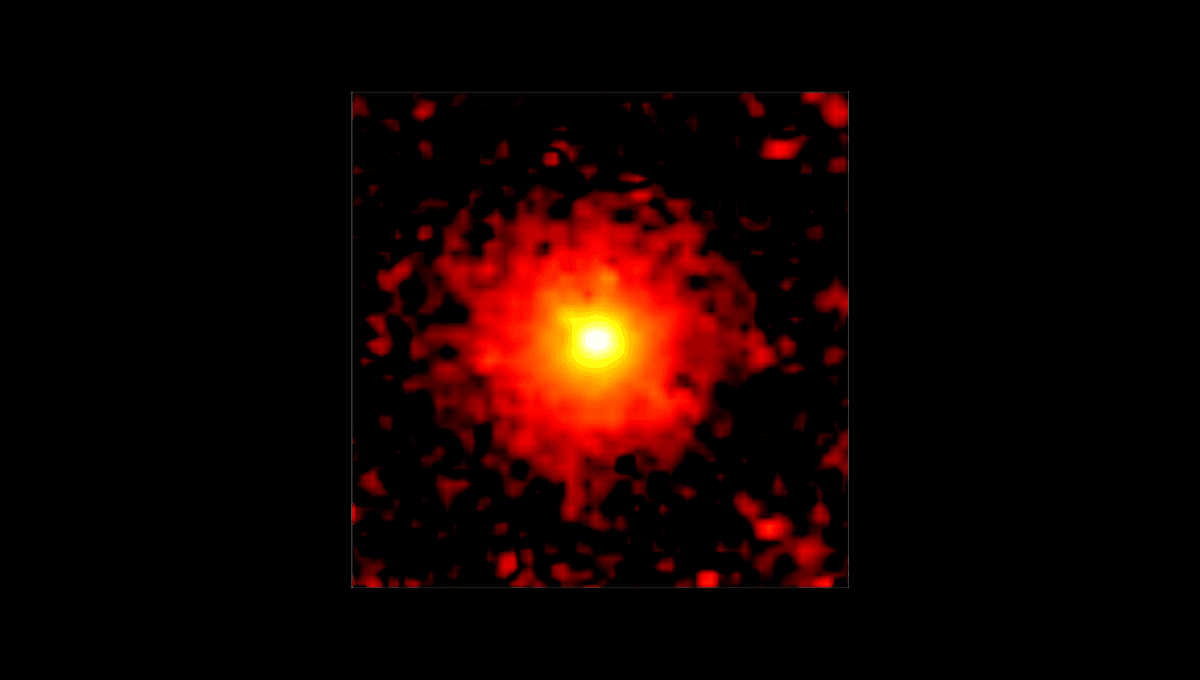
    Interstellar Comet 3I/ATLAS has taken scientists by surprise with its recent dramatic uptick in activity following its perihelion passage. This cosmic wanderer is believed to have journeyed through the galaxy for over 10 million years without encountering another star, making it potentially older than our entire Solar System. The comet’s latest behavior has piqued the interest of researchers worldwide, shedding new light on the mysteries of interstellar objects.

    After making its closest approach to the Sun, known as perihelion, Comet 3I/ATLAS experienced a significant outburst, releasing a substantial amount of organic molecules into space. This sudden surge in activity has left astronomers astounded, as the comet’s behavior deviates from typical expectations for objects of its kind. The unprecedented release of organic compounds has sparked intense speculation about the comet’s composition and origin.

    Comets like 3I/ATLAS are considered valuable relics from the early days of our Solar System, offering insights into the conditions that prevailed during its formation. By studying the composition of these icy visitors from deep space, scientists can unravel the chemical makeup of the primordial material that eventually coalesced to form planets like Earth. The recent outburst of organic molecules from Comet 3I/ATLAS presents a rare opportunity to analyze these ancient building blocks up close.

    The discovery of such a wealth of organic compounds on Comet 3I/ATLAS has raised intriguing questions about the potential for life beyond our planet. While the presence of organic molecules does not guarantee the existence of life, it underscores the abundance of complex chemistry in the cosmos. Scientists are eager to delve deeper into the nature of these compounds and their role in the cosmic tapestry, hoping to uncover clues about the origins of life in the universe.

    The evolving behavior of Comet 3I/ATLAS serves as a reminder of the dynamic and unpredictable nature of celestial objects. As it continues its journey through the cosmos, astronomers will be closely monitoring its activity, hoping to glean further insights into the mysteries of interstellar space. The comet’s recent outburst has reignited scientific curiosity and highlighted the need for continued exploration and study of these enigmatic visitors from the depths of the galaxy.

    Source: Iflscience.Com

    Follow & Learn More

    Trusted Sources: NASA | Nature

    Watch Related Video

    Video embedded from YouTube. Watch on YouTube

    YouTube: 📺 Smarter Every Day | 📺 NASA

    Twitter/X: @newscientist | @NASA
  • Jupiters Moon Mission Searching for Life in Our Solar System

    Jupiters Moon Mission Searching for Life in Our Solar System

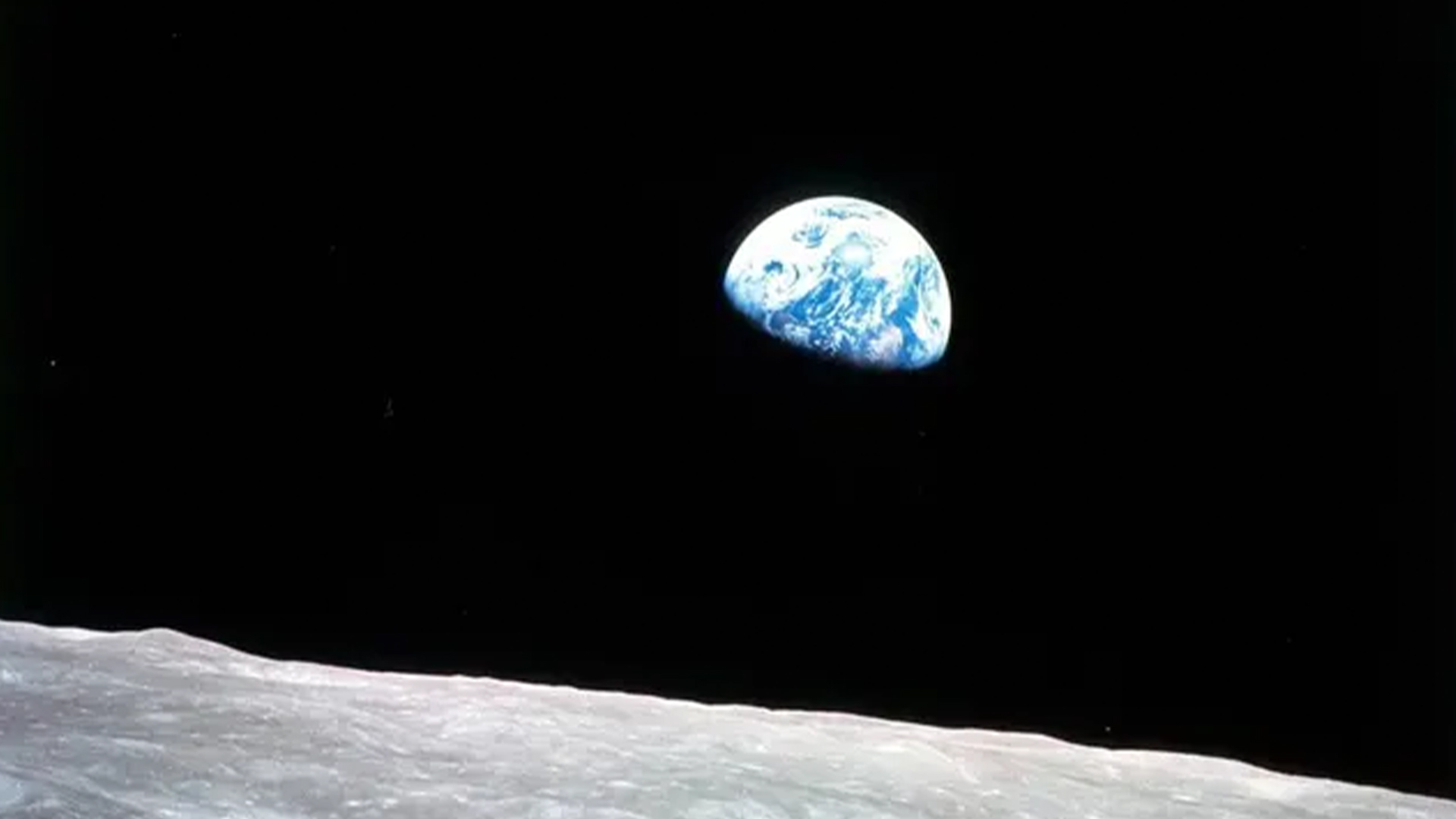
    In the vast expanse of space, where mysteries unfold and wonders await discovery, lies a story that intertwines human exploration with the quest for extraterrestrial life. It all begins with a photograph, an image capturing Earth’s stunning rise above the moon’s horizon, forever etched in history as the iconic “Earthrise” photo.

    The Beginning of a Legacy

    The year was 1968 when Apollo 8 astronaut William Anders gazed upon our planet from afar and immortalized the moment in a single frame. In that picture-perfect scene, nestled within the foreground, lay a lunar crater known as “Pasteur T,” stretching its contours across the lunar landscape like a silent witness to history.

    As time unfurled its tapestry, this once obscure lunar feature gained newfound fame as it became synonymous with Anders’ awe-inspiring snapshot. Renamed “Anders’ Earthrise” in 2018, the crater stood as a testament to humanity’s unyielding spirit of exploration and curiosity.

    A New Chapter Unfolds

    Fast forward nearly six decades later, and another spacecraft enters the stage — the Jupiter Icy Moons Explorer (JUICE). Launched on a mission towards Jupiter’s orbit to unlock secrets hidden amidst its icy moons, JUICE embarked on a journey that would redefine our understanding of these distant worlds.

    During its sojourn through space, JUICE seized an opportunity to peer at Anders’ Earthrise crater from orbit. A pivotal moment emerged as scientists aboard this interstellar vessel engaged their instruments in a harmonious symphony of discovery.

    Unveiling Secrets Beyond

    Among JUICE’s arsenal of scientific tools stood the Radar for Icy Moon Exploration (RIME), designed to penetrate icy surfaces and unveil rocky subterranean realms lurking beneath Europa, Ganymede, and Callisto. As RIME cast its gaze upon Anders’ Earthrise crater during those serene eight minutes of observation, whispers of electronic noise disrupted its delicate measurements.

    Undeterred by challenges encountered along their cosmic odyssey, ESA scientists embarked on a voyage of problem-solving and innovation. Through meticulous refinements and algorithmic wizardry, they fine-tuned RIME’s capabilities until it mirrored perfection itself.

    A Pathway to Discovery

    With newfound clarity bestowed upon them by RIME’s refined radar maps, scientists now set their sights on Jupiter’s realm — where giants roam amongst frozen moons shrouded in mystery. JUICE charts its course towards Venus before rendezvousing with Jupiter’s entourage for an intricate ballet of flybys around these enigmatic celestial bodies.

    As JUICE weaves through an intricate cosmic dance choreographed by gravitational forces unseen yet profoundly felt, humanity stands poised on the cusp of revelation. The allure of unraveling ancient enigmas buried beneath icy crusts propels us forward into uncharted territories brimming with potential discoveries waiting to be unearthed.

    In this grand cosmic saga playing out against the backdrop of endless space-time tapestries, one thing remains certain — our insatiable thirst for knowledge transcends earthly bounds and propels us ever closer towards unlocking the secrets that lie beyond.

  • Blue Origins Historic NS-34 Launch Justin Sun and 5 Adventurers Head to Space

    Blue Origins Historic NS-34 Launch Justin Sun and 5 Adventurers Head to Space

    Countdown to Liftoff

    Today marks a significant milestone in space exploration as Blue Origin prepares to launch the NS-34 crewed suborbital mission. The sleek New Shepard vehicle, designed by Jeff Bezos’ aerospace company, is set to soar into the final frontier with an eclectic group of passengers onboard.

    The excitement is palpable as crypto billionaire Justin Sun gears up for this extraordinary journey alongside five other individuals who are about to embark on a once-in-a-lifetime adventure. The clock is ticking towards liftoff at Blue Origin’s West Texas spaceport, where history will be made high above the Earth’s atmosphere.

    A Closer Look at the Passengers

    Among the star-studded lineup for the NS-34 mission stands Justin Sun, a dynamic 34-year-old entrepreneur known for founding Tron, a prominent blockchain platform. Sun’s passion for innovation and technology has propelled him into the realm of space travel, culminating in his eagerly anticipated voyage aboard New Shepard.

    Accompanying Sun on this cosmic escapade are Arvinder (Arvi) Singh Bahal, a daring Indian-born American real estate investor; Gökhan Erdem, a visionary Turkish businessman and photographer; Deborah Martorell, a seasoned journalist and meteorologist hailing from Puerto Rico; Lionel Pitchford, an English philanthropist dedicated to running an orphanage in Nepal; and James (J.D.) Russell, an enterprising American entrepreneur.

    Each member of this diverse cohort brings their own unique background and spirit of adventure to the mission. Together, they symbolize humanity’s collective dream of exploring beyond our planet’s boundaries.

    A Journey Beyond Earth

    As Blue Origin’s NS-34 aims to become the 14th human spaceflight aboard New Shepard, spectators around the world await with bated breath for lift-off. The innovative design of New Shepard combines a reusable rocket with a crew capsule that ensures safe passage both up and down through Earth’s atmosphere.

    Once launched, passengers will ascend above the Kármán line—a symbolic boundary marking entry into outer space—where they will experience moments of weightlessness against the backdrop of our planet suspended in darkness. It’s a fleeting yet unforgettable experience that captures the essence of human curiosity and exploration.

    An Unforgettable Legacy

    Justin Sun’s involvement in this historic flight not only underscores his commitment to pushing boundaries but also reflects a broader trend towards democratizing access to space travel. While his initial bid was shrouded in mystery until later revealed by Blue Origin, it signified more than just securing a seat—it was an investment in inspiring future generations towards careers in STEAM disciplines (science, technology, engineering, art & math).

    Through missions like NS-34 and initiatives aimed at fostering scientific education and innovation globally, we witness firsthand how space exploration transcends individual achievements to become a shared legacy for all humankind.

    Thus as we await today’s launch with anticipation and wonderment may we remember that each journey into space carries within it seeds of inspiration that have yet to fully bloom across generations yet unborn.

  • Inner Planetary Harmony The Solar Systems Waltz of Planets

    Inner Planetary Harmony The Solar Systems Waltz of Planets

    New research has unearthed a mesmerizing cosmic dance that took place in our solar system billions of years ago. Imagine Earth, Mars, and even a distant planet twirling gracefully around the sun in perfect synchronization. It’s like a celestial waltz frozen in time.

    Planetary Rhythm

    The recent study suggests that four of the rocky inner planets, including Earth and an elusive lost world, once pirouetted harmoniously around our young sun. This harmony hints at a profound connection between these celestial bodies, hinting at an ancient choreography that shaped the early solar system.

    As astronomers delve deeper into the mysteries of planetary systems, they are discovering intriguing patterns and resonances that hint at the dynamic evolution of these cosmic neighbors. The idea of resonance – where planets move to the beat of whole-number orbital ratios – adds a poetic flair to the grand ballet of space.

    Cosmic Metamorphosis

    Picture this: newborn planets swirling around their stellar parent like dancers in a celestial ballroom. These planetary pairs or triplets exhibit a rhythmic interplay influenced by their mutual gravitational tugs. It’s almost as if nature itself composed a symphony in the stars.

    Intriguingly, past studies on exoplanet families have unveiled similar resonant dances among distant worlds orbiting alien stars. The discovery of such cosmic symmetries challenges our perceptions of how planetary systems take shape and evolve over eons.

    Rhythmic Evolution

    One fascinating example is the TRAPPIST-1 system with its seven-planetary ensemble moving in graceful unison around their diminutive star. This synchronized performance underscores the intricate interplay between planets born within gas-rich protoplanetary disks, where orbital resonances emerge as a natural consequence.

    Looking closer to home, Jupiter and Saturn once engaged in a harmonious duet before cosmic forces disrupted their synchronized motion billions of years ago. This ancient dance echoes throughout our solar system’s history, leaving behind clues for astronomers to decipher.

    Expert astrophysicists like Chris Ormel from Tsinghua University are unlocking secrets hidden within these planetary movements. By delving into computer simulations and analyzing isotopic signatures from Martian rocks, scientists paint vivid pictures of our solar system’s primordial days.

    Celestial Revelations

    The collision that birthed Earth’s moon or the resonant chain linking Venus to Mars offer glimpses into our planet’s tumultuous past. Each crater on Mercury or canyon on Mars narrates tales written in stardust billions of years ago when our solar neighborhood was still taking shape.

    Through meticulous observations and complex models, researchers reconstruct ancient scenarios where giant gas giants play tug-of-war with terrestrial worlds. These simulations provide tantalizing insights into how Earth-like planets found their places amidst cosmic chaos.

    By peering back through time using advanced computational tools and astronomical data points, scientists piece together narratives from epochs long gone but not forgotten in the annals of space exploration.

    Ancient Echoes

    Venus stands as an ancient sentinel preserving clues about our solar system’s formative years within its mantle depths — offering future missions keys to unlock mysteries buried beneath its enigmatic veil. As we gaze at neighboring worlds through telescopic lenses, we glimpse shadows cast by celestial events etched across time immemorial.

    The dance continues as outer gas giants sculpt inner realms with gravitational embraces or violent encounters reshaping entire planetary landscapes like artists crafting masterpieces on a vast cosmic canvas.

  • NUBE Unraveling Cloud Mysteries Through Playful Discovery

    NUBE Unraveling Cloud Mysteries Through Playful Discovery

    Clouds are not just fluffy shapes in the sky; they hold secrets about our weather and climate. Imagine if there was a fun way to decode these mysteries – well, now there is! Let me introduce you to NUBE, a captivating card game designed to help learners of all ages identify different cloud types while having an absolute blast.

    **Cloudy Beginnings**

    To understand the magic behind NUBE, we need to take a peek into its creation story. Picture this: The NASA Science Activation Program joined hands with the Queens Public Library to birth a one-of-a-kind gaming experience called NUBE. This innovative card game is part of the Global Learning & Observations to Benefit the Environment (GLOBE) initiative – aiming to make learning about clouds as delightful as spotting shapes in the sky.

    **A Game-Changer in Cloud Education**

    As you dive into NUBE’s world, you’ll find yourself immersed in an interactive gameplay where players match cards based on cloud types or sky colors. With 11 distinct cloud varieties and 5 shades of blue representing aerosol levels in the atmosphere, every card flip unfolds a new learning adventure.

    Expert Insight:

    “Games like NUBE provide a unique opportunity for hands-on learning that sticks with participants long after they finish playing,” says Dr. Sarah Cloudwatcher, a renowned meteorologist.

    But wait, there’s more! Special cards like Rainmakers, Obscurations, and Mystery cards add twists and turns, making every round unpredictable and engaging. It’s not just about identifying clouds; it’s about unraveling a captivating storyline woven through each play session.

    **From Labs to Living Rooms**

    NUBE didn’t just materialize out of thin air; it underwent rigorous testing at various educational centers like the Challenger Center and STEM Teaching hubs before reaching your fingertips. Alex Hernandez Bonifacio from Queens Public Library shared an insightful anecdote revealing how young minds were enlightened by playing NUBE:

    “It was amazing to see what kids reflected on as they were playing NUBE…”

    Through feedback from testers and graphic design polls, NUBE emerged as a polished gem ready for eager players worldwide. Whether you’re organizing family game nights or school programs related to weather studies, this game promises hours of entertainment intertwined with valuable knowledge.

    **Embrace Your Inner Citizen Scientist**

    If delving deeper into cloud science excites you beyond measure, why stop at playing cards? Download the GLOBE Observer app on your smartphone and embark on real-time scientific research by sharing environmental observations – becoming a citizen scientist without boundaries!

    With NESEC spearheading this educational revolution alongside NASA Science Activation initiatives like NASA@ My Library (NAML), learning about clouds transcends textbooks and enters the realm of immersive discovery through play.

    So next time you gaze up at those billowing clouds drifting across the azure canvas above, remember that within those wisps lies a whole universe waiting to be explored – maybe even through a deck of cards named NUBE!

  • The Planets Unpredictable Spin A Tale of Acceleration and Gravity Whirls

    The Planets Unpredictable Spin A Tale of Acceleration and Gravity Whirls

    “The faster the planet, the fiercer the storms…” In the whirlwind of our lives, have you ever stopped to ponder what it would be like if Earth decided to quicken its pace? Well, over the past month, our home base in space has been on a rapid spin cycle. Imagine this — Earth was whizzing so fast that it managed to shave off 1.4 milliseconds from its usual 24-hour day. Now I know what you’re thinking, such minuscule changes may seem inconsequential to us mere mortals scuttling about on its surface, but what if things spun wildly out of control?

    Let me take you on a journey through my debut novel

    “Circular Motion,”

    where I explore the repercussions of a world hurtling through time at breakneck speeds. Picture this scenario: Earth decides to pick up the tempo not just by milliseconds but by minutes, hours, or even half a day! How would such a cosmic dance affect us earthlings who are already struggling with our daily grind?

    In

    “Circular Motion,”

    as Earth’s rotation accelerates beyond belief, chaos ensues for my characters trying to keep up with an ever-shrinking timeline. To make matters worse, their relentless pursuit only exacerbates the planetary pandemonium caused by a high-speed global transport system fueling Earth’s frenzied spin. It’s like running in circles – except these circles threaten their very existence.

    Now brace yourself because when Earth hits full throttle on its twirlometer, scheduling conflicts become trivial compared to the cataclysmic events that unfold. The planet’s spin isn’t just about sunrises and sunsets; it orchestrates a delicate balance within our ecosystem – affecting everything from magnetic fields to animal migrations and even celestial light shows like the northern lights.

    As I delved into depicting these cosmic shifts in

    “Circular Motion,”

    some effects were merely for amusement – like wild animals roaming free – while others carried profound symbolic weight mirroring real-world climate upheavals. Did you know that cyclones and other ferocious storms feed off Earth’s swift rotation thanks to something called the Coriolis effect? Yes, dear reader, faster spins breed fiercer tempests!

    Yet amidst all these mind-bending phenomena painted in my narrative canvas lies one gravity-defying twist that gripped me as an author– how increasing speed alters gravity itself! Consider this: as Earth picks up pace twirling us around like dancers at an intergalactic ballroom party, gravity struggles to keep us grounded. Consequently, we start feeling lighter as if someone dialed down gravity’s pull – making everyday activities feel oddly weightless.

    But here comes the juicy part – did you know that due to Earth’s rotation alone, we experience about 1% less gravitational force compared to standing still at the equator? It’s like being on your best behavior at centrifugal-force-induced weight-loss camp! And trust me; things get weirder away from this imaginary hula-hoop hotspot where gravity tugs at odd angles due to your wonky orbital trajectory.

    In

    “Circular Motion,”

    I meticulously crafted scenes capturing escalating ‘gravity loss’ scenarios across London’s bustling streets or California’s sunny shores as time slips away hour by hour. Picture yourself navigating life under circumstances where every step feels like walking on air or witnessing whole cities tilt askew at alarming angles.

    As my tale unfolds further into uncharted realms of topsy-turvy existence in “Circular Motion,” one burning question emerges amidst all chaos – how do we find stability and meaning amid such turbulence? Through love? Career pursuits? Spiritual quests? My characters grapple with timeless dilemmas against a backdrop of spinning uncertainty echoing our own quest for purpose and connection in today’s hectic world.

    So dear reader get ready for an exhilarating ride through Alex Foster’s “Circular Motion” where acceleration meets introspection – join us at New Scientist Book Club as we dive into uncharted dimensions together!

  • Australias Pink Lakes Natures Colorful Microbial Masterpieces

    Australias Pink Lakes Natures Colorful Microbial Masterpieces

    Australia is home to some of the most stunning pink lakes in the world, with Lake Hillier standing out as one of the most famous. This bubblegum-pink wonder has captivated visitors with its vibrant hues and mysterious origins. But what exactly makes these lakes turn such a striking shade of pink?

    The Pink Phenomenon

    The secret behind Australia’s pink lakes lies in the presence of unique bacteria and microalgae that thrive in these saline waters. These bodies of water are around 10 times saltier than the ocean, creating an ideal environment for algae and bacteria to produce beta-carotene, a red-orange pigment. This pigment is not only responsible for giving the lakes their rosy color but is also found in everyday items like carrots, crayfish, and even flamingos.

    Ancient Origins

    These pink lakes are more than just colorful attractions; they are remnants of ancient rivers that once meandered across the Australian landscape over 15 million years ago. As these rivers dried up, pockets of water were left behind and gradually evaporated, leaving behind highly concentrated salt deposits. Over time, salt-loving microorganisms such as Dunaliella salina and Salinibacter ruber colonized these waters, turning them into thriving ecosystems teeming with life.

    Delicate Balance

    While these pink lakes may seem resilient, they are actually quite fragile ecosystems that can be easily disrupted by changes in their environment. For instance, heavy rainfall can dilute the salt content of the lakes, causing a shift in microbial populations. This disruption was seen at Lake Hillier when extreme rainfall altered its salinity levels and turned it from pink to blue-gray.

    Environmental Impact

    Human activities have also played a significant role in altering the delicate balance of these pink lakes. Pink Lake near Esperance underwent a dramatic transformation from pink to blue-gray due to extensive salt mining operations in the area. The extraction of salt for various purposes depleted the lake’s natural salts, leading to a drastic change in its ecosystem.

    Road to Recovery

    Despite facing challenges from climate change and human interference, there is hope for these unique ecosystems. Experts believe that with proper management and conservation efforts, pink lakes like Lake Hillier could regain their iconic pink hue within the next decade. Proposals to artificially restore salt levels in Pink Lake offer a glimmer of hope for its revival as well.

    Biodiversity Hotspots

    Pink lakes serve as vital habitats for diverse wildlife such as nomadic birds and brine shrimp along with supporting unique ecosystems like no other place on Earth. They provide valuable insights into extremophiles—organisms capable of surviving harsh conditions—and offer scientists clues about potential life on other planets like Mars.

    In conclusion, Australia’s pink lakes are not just visually stunning marvels but also important ecological sites rich in biodiversity and scientific value. As we continue to study and protect these fragile wonders, we unlock secrets about our planet’s past while pondering possibilities for life beyond our world.

  • Exploring the Mysteries of Earths Moon

    Exploring the Mysteries of Earths Moon

    On a crisp evening under the star-studded sky, our gaze often shifts towards the mesmerizing Moon—our celestial neighbor that has captivated humanity for centuries. Let’s dive into the enchanting world of lunar exploration and discover the wonders that lie beyond.

    The Pioneering Spirit of Apollo

    Journey back to May 8, 2022, when NASA’s Exploration Ground Systems’ Program Manager, Shawn Quinn, immortalized a breathtaking snapshot of the Hadley–Apennine region on Earth’s Moon. The image meticulously captured the Apollo 15 landing site nestled near the edge of a lunar mountain’s shadow—a poignant reminder of humanity’s first steps into extraterrestrial realms.

    The Apollo Program stands as a testament to human ingenuity and audacity. It was during these historic missions that we dared to venture beyond our earthly confines and set foot on another celestial body. The legacy of Apollo continues to inspire generations as we push the boundaries of exploration further than ever before.

    Artemis: A New Dawn in Lunar Exploration

    As we stand on the cusp of a new era in space exploration, Artemis emerges as the beacon lighting our path to deeper cosmic voyages. Building upon the foundations laid by Apollo, Artemis represents a bold endeavor to validate human capabilities in traversing deep space—an essential stepping stone towards sustained lunar presence and groundbreaking scientific endeavors on our closest cosmic companion.

    The Artemis crews are poised at the forefront of history, ready to embark on missions that will redefine our understanding of outer space. Their endeavors hold promises not only for scientific discovery but also for paving the way for future explorers who dream of venturing into uncharted territories beyond Earth.

    Unveiling Secrets Through Lunar Exploration

    The Moon stands as an enigmatic world waiting to reveal its hidden truths to those willing to listen. From probing its ancient craters for clues about our solar system’s early days to studying its regolith for insights into celestial evolution, each mission is a testament to humanity’s insatiable curiosity and relentless pursuit of knowledge.

    Through Artemis and subsequent lunar missions, we aim not just to visit but to establish a sustainable presence—a foothold that will enable us to delve deeper into mysteries yet unravelled. The Moon beckons us with whispered secrets from eons past, inviting us to uncover its veiled mysteries one mission at a time.

    Expert Insight: Dr. Celeste Roberts

    Dr. Celeste Roberts, an esteemed astrophysicist renowned for her work on lunar geology, shares her perspective on Artemis and its implications for future space exploration:

    “Artemis heralds an exciting chapter in humanity’s cosmic odyssey. By leveraging technological advancements and lessons learned from past missions, we are embarking on a transformative journey towards establishing a permanent human presence beyond Earth.”

    Dr. Roberts’ words encapsulate the essence of Artemis—a vision that transcends borders and unites us in our collective quest for understanding the cosmos.

    In conclusion, as we cast our eyes towards Earth’s faithful companion illuminating the night sky with its silvery glow, let us remember that each cratered surface hides stories untold and mysteries waiting to be unveiled. Through projects like Artemis, we inch closer towards fulfilling mankind’s age-old dream—reaching out towards worlds unknown and embracing the boundless possibilities that await among the stars.

  • The Midpoint Cloud Unveiling Mysteries in Our Galactic Center

    The Midpoint Cloud Unveiling Mysteries in Our Galactic Center

    An expansive structure, known as the Midpoint cloud, has recently caught the attention of astronomers. Spanning a colossal 200 light-years, this giant molecular cloud (GMC) resides in an uncharted expanse of the Milky Way. It was serendipitously stumbled upon by a dedicated team wielding the remarkable Green Bank Telescope.

    “No one had any idea this cloud existed until we looked at this location in the sky and found the dense gas,”

    remarked Natalie Butterfield, the lead scientist from the National Radio Astronomy Observatory, expressing her astonishment at their discovery.

    Delving into the depths of the Midpoint cloud, researchers uncovered a dynamic environment teeming with potential star-forming sites and dense dust lanes nourishing our galaxy’s core. These thick lanes act as hidden conduits ferrying material from the Milky Way’s disk towards its central regions.

    “These dust lanes are like hidden rivers of gas and dust that are carrying material into the center of our galaxy,”

    described Butterfield passionately. The Midpoint cloud serves as a crucial juncture where substances from our galaxy’s disk transition into the extreme conditions of its core—an invaluable opportunity for studying initial gas conditions before converging at our galactic center.

    Within this cosmic behemoth, turbulent gases mirror those found nearer to the Milky Way’s heart. This chaotic motion hints at material flow along dust lanes or interactions between the Midpoint cloud and neighboring molecular clouds.

    Amidst these celestial wonders lie clusters of dense gas and dust poised to collapse and give birth to new stars. Notably, Knot E stands out as a compact entity undergoing erosion due to nearby stellar radiation—classified as free-floating evaporating gas globules (frEGGs).

    Additionally, researchers unearthed an intense microwave radiation source called a “maser” within the Midpoint cloud—a probable sign of vigorous star formation processes unfolding within its confines. Moreover, evidence suggests that supernova explosions from massive stars sculpted shell-like formations within this enigmatic cloud.

    The significance of the Midpoint cloud extends beyond mere observation; it plays a pivotal role in channeling matter from the Milky Way’s disk to its core—an essential nourishment for star formation within our galaxy’s bustling central bar structure.

    Expert insights shed light on galactic bars’ enigmatic nature concerning star formation dynamics. Larry Morgan from Green Bank Observatory emphasized how these regions can either stifle or spur star birth based on intricate forces at play. The juxtaposition at leading edges like where Midpoint resides highlights their potential in triggering fresh rounds of stellar genesis.

    Published in The Astrophysical Journal on July 16th, this groundbreaking research underscores how understanding structures like Midpoint could unravel mysteries surrounding star assembly processes within galaxies’ cores—a puzzle awaiting further exploration by scientists captivated by cosmic marvels.

Top Categories