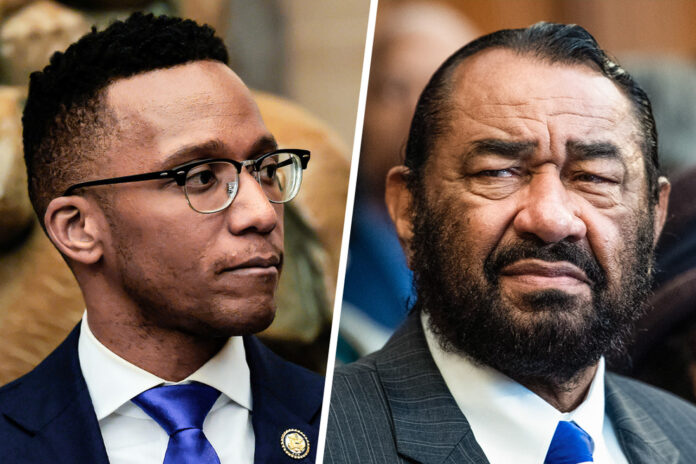


The new Texas congressional map that kicked off a nationwide redistricting fight last year was designed to boost Republicans in the midterm elections.
February 26, 2026
Introduction to the Redistricting Challenge
The latest redistricting effort in Texas has plunged the state’s Democratic Party into a series of contentious primary battles, reshaping the political landscape in a manner that is both strategic and divisive. This maneuvering, primarily orchestrated to reinforce Republican dominance in forthcoming elections, has inadvertently led to a situation where established Democratic allies find themselves in opposition.
Clash in Houston: Menefee vs. Green
In Houston, the political terrain has shifted dramatically for Rep. Christian Menefee, who recently entered Congress following a special election. His entry into the political arena comes after the passing of Rep. Sylvester Turner. Menefee now faces the challenge of securing a full term in a district redefined by redistricting. This new configuration has placed him against veteran Rep. Al Green, whose constituency has been altered to favor Republican interests. Green, a seasoned legislator with significant tenure, now confronts a novel electoral landscape that demands adaptation and resilience.
Dallas: Allred vs. Johnson
A similar scenario is unfolding in Dallas, where former Rep. Colin Allred is now contesting against Rep. Julie Johnson in a district that has undergone its own redistricting adjustments. Allred’s decision to re-enter the House race, after initially stepping away for a Senate bid, is emblematic of the challenges and recalibrations necessitated by the new district lines. This competition has been particularly intense, with debates over stock trading and immigration policies taking center stage.
Redistricting: A Historical and Strategic Tool
Historically, redistricting occurs every ten years post-census, a process intended to reflect shifts in population and ensure equitable representation. However, it often becomes a strategic tool wielded by political parties to consolidate power. The current redistricting in Texas exemplifies this tactic, as it seems designed to provoke intra-party conflicts among Democrats, thereby diluting their collective electoral strength.
Implications and Reactions
The ramifications of this redistricting are profound, affecting not only individual political careers but also the broader Democratic strategy in Texas and potentially nationwide. Such internal divisions could hinder the party’s ability to present a united front in general elections. The discourse within these primaries also highlights broader themes that are likely to resonate in Democratic primaries across the country throughout the year.
As these primaries unfold, key figures like Menefee and Green navigate a complex political landscape, balancing personal ambitions with the broader implications for their party. Green’s long-standing service and Menefee’s fresh perspective exemplify the generational and strategic dynamics at play. Meanwhile, the Dallas matchup between Allred and Johnson underscores the personal and political recalibrations necessitated by these new district boundaries.
Conclusion: Navigating a New Political Reality
As early voting progresses, Texas voters face decisions that will shape the state’s political future. The outcomes of these primaries will not only determine individual careers but also signal how effectively the Democratic Party can adapt to and overcome the challenges posed by strategic redistricting. The current electoral contests offer a preview of the intricate dance between maintaining political alliances and adapting to new political realities, a dance that is being watched closely by political analysts nationwide.
Originally reported by nbcnews.com. Rewritten by 360DailyTrend editorial staff.