

The new Texas congressional map that kicked off a nationwide redistricting fight last year was designed to boost Republicans in the midterm elections.
February 26, 2026
The recent Texas congressional re-mapping, designed to bolster Republican chances in upcoming midterm elections, has inadvertently set the stage for fierce Democratic primary contests. This redistricting has forced new and longstanding Democratic figures to compete against each other, thrusting internal party dynamics into the spotlight.
Key Developments
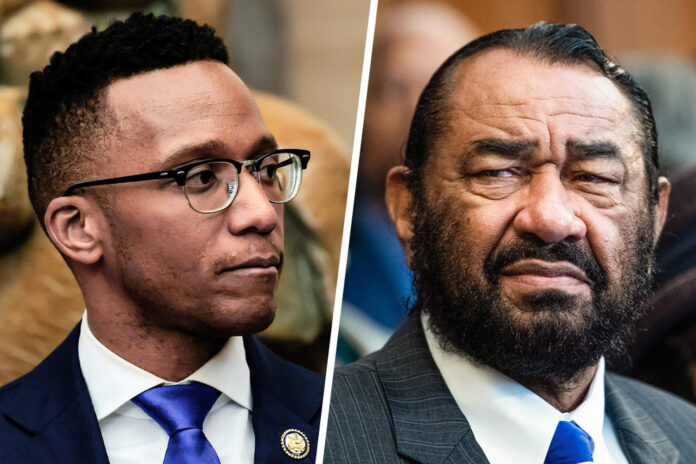
Rep. Christian Menefee, having recently secured a seat in a special election following the passing of Rep. Sylvester Turner, now faces a challenging primary against veteran Rep. Al Green. The redrawn district places Menefee in a new voter landscape while pushing Green into a district that has shifted to favor Republicans, requiring him to seek reelection in a competitive Democratic primary.
Similarly, former Rep. Colin Allred, initially endorsing Rep. Julie Johnson for a Dallas-based seat, has reversed course due to redistricting, now challenging her candidacy. This unexpected rivalry underscores the complexities introduced by the map changes, affecting strategic decisions and previous endorsements.
These scenarios are a direct consequence of redistricting, a process occurring every ten years post-census, which occasionally results in incumbents contesting the same seat. Early voting in Texas has commenced, with voters poised to decide the fates of these incumbents.
Expert Context
Redistricting is a constitutionally mandated process that reflects demographic shifts, intended to ensure equitable representation. However, it often becomes a contentious political tool. The recent Texas redistricting has been described by some, including Colin Allred, as a strategic maneuver by the Trump administration to create divisions within the Democratic Party. He stated,
“They wanted to draw districts together to force Democrats to run against each other. They wanted to sow division and reduce representation, and that’s what their aim was.”
Historically, redistricting has been used to consolidate power for the ruling party, as seen in Texas’s new map that consolidates Republican strongholds. This aligns with broader national trends where political parties engage in gerrymandering to secure electoral advantages.
Implications
The redistricting-induced primaries in Texas could profoundly reshape Democratic representation in the state. Incumbents like Al Green, who emphasize their seniority and legislative achievements, face the challenge of appealing to new electorates. Green’s response to age-related criticisms highlights the tension between experience and calls for generational change, a theme resonant across many political landscapes.
For newer entrants like Menefee, the challenge lies in establishing recognition and support amidst an altered voter base. His recent election victory and the subsequent primary underscore the volatility and unpredictability introduced by redistricting.
Outlook
As early voting progresses, the outcomes of these primaries will likely provide insights into the long-term impact of redistricting on Democratic strategies and electoral viability in Texas. The ability of these candidates to navigate the census-driven changes will be critical as they aim to consolidate their positions and address the broader challenges posed by the evolving political landscape.
In conclusion, while redistricting is a routine part of the political cycle, its ramifications can be profound, particularly in states like Texas where political stakes are high. The ongoing primaries will be a test of adaptability and strategic foresight for the Democratic Party as it seeks to maintain and expand its influence in the region.
Originally reported by feeds.nbcnews.com. Summary by 360DailyTrend.